Communications
Textbooks
Boundless Communications
Persuasive Speaking
Types of Persuasive Speeches
Communications Textbooks Boundless Communications Persuasive Speaking Types of Persuasive Speeches
Communications Textbooks Boundless Communications Persuasive Speaking
Communications Textbooks Boundless Communications
Communications Textbooks
Communications
Concept Version 10
Created by Boundless

Persuasive Speeches on Questions of Value

In persuasive speeches on questions of value, we argue something is right or wrong, moral or immoral, or better or worse than another thing.

Learning Objective

  • Define a persuasive speech of value


Key Points

    • Persuasive speeches on questions of value imply certain actions, but they are not a call to action.
    • Persuasive speeches of value depend on a judgement that something is right or wrong, moral or immoral, or better or worse than another thing.
    • The speech should include an appeal, criteria for judgement, and facts that support the appeal using the judgement criteria.

Term

  • policy

    A principle of behavior, conduct, etc., thought to be desirable or necessary, especially as formally expressed by a government or other authoritative body.


Example

    • "To persuade my audience that it is wrong to drive over the speed limit. " "To persuade my audience that Pepsi is better than Coke. " "To persuade my audience that it is better to live together before marriage. " "To persuade my audience that swimming is the best form of exercise. " "To persuade my audience that bikes are the best form of transportation to get around town. "

Full Text

Introduction

There are three types of persuasive speeches:

  • Persuasive speeches of fact
  • Persuasive speeches of value
  • Persuasive speeches of policy

In this unit, our focus will be on persuasive speeches of value. Here is where we argue something is right or wrong, moral or immoral, or better or worse than another thing. The appeals are made on value judgements .

Examples include speeches that attempt to persuade the audience that it is wrong to drive over the speed limit, that Pepsi is better than Coke, that it is better to live together before marriage, that swimming is the best form of exercise, or that bikes are the best form of transportation to get around town.

Persuasive speeches on questions of value imply certain actions, but they are not a call to action.

Questions to Ask Yourself

When analyzing any type of persuasive speech, you should ask yourself the following questions:

  • What is the speaker's goal?
  • What are the main points?
  • How does the structure of the speech help the speaker to make the argument?
  • How does the speaker try to make you care?
  • How does the speaker use evidence?
  • What kinds of sources does the speaker use?

Creating a Persuasive Speech on Questions of Value

How should you go about creating such a speech?

  • Introduce appeals, information, and criteria.
  • Provide evidence that makes your audience arrive at your conclusion. (Your claims should agree with the current beliefs and feeling of your audience. )
  • Use facts to justify your claims.
  • Consider your audience's feeling and values.
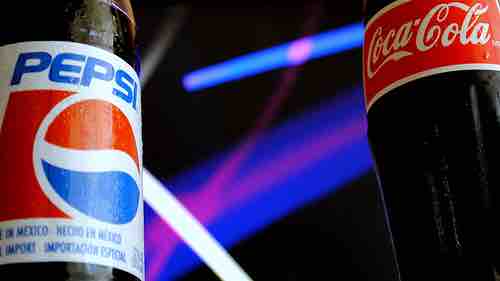
Coke vs. Pepsi

Persuading the audience that Pepsi is better than Coke is a question of value speech, as it hinges on a value judgement.

[ edit ]
Edit this content
Prev Concept
Persuasive Speeches on Questions of Fact
Persuasive Speeches on Questions of Policy
Next Concept
Subjects
  • Accounting
  • Algebra
  • Art History
  • Biology
  • Business
  • Calculus
  • Chemistry
  • Communications
  • Economics
  • Finance
  • Management
  • Marketing
  • Microbiology
  • Physics
  • Physiology
  • Political Science
  • Psychology
  • Sociology
  • Statistics
  • U.S. History
  • World History
  • Writing

Except where noted, content and user contributions on this site are licensed under CC BY-SA 4.0 with attribution required.