 Print book
 Print this chapter
Multifactor Authentication
4. Enabling Flexible MFA Operation
4.2. Proposed Reversed Methodology
 . Each factor
  has a unique secret
  obtained with the corresponding procedure (PIN, fingerprint, etc.) from the user. In the worst case, it is related to the biometric
data-the probability that it changes over time is low. The corresponding factors and secrets could then be represented as
obtained with the corresponding procedure (PIN, fingerprint, etc.) from the user. In the worst case, it is related to the biometric
data-the probability that it changes over time is low. The corresponding factors and secrets could then be represented as

where
is the secret value obtained from the sensor (factor),  is the number of factors required to reconstruct the secret, and
  is a timestamp collected at time instant
  . It is important to note that providing the
actual secrets to the verifier is not an option, especially in case of sensitive biometric data, because a fingerprint is typically an unchangeable factor. Hence, letting even a trusted instance obtain the corresponding data is a questionable step to
make. Conversely, compared to the method considered in Section 4.1, the modified algorithm implies that are obtained from the factors (only one polynomial describes the corresponding curve), as it is shown in Figure 5. In other words, the proposed
methodology produces the system secret
. It is important to note that providing the
actual secrets to the verifier is not an option, especially in case of sensitive biometric data, because a fingerprint is typically an unchangeable factor. Hence, letting even a trusted instance obtain the corresponding data is a questionable step to
make. Conversely, compared to the method considered in Section 4.1, the modified algorithm implies that are obtained from the factors (only one polynomial describes the corresponding curve), as it is shown in Figure 5. In other words, the proposed
methodology produces the system secret  based on the collected factor values instead of assigning them in th first place. A system of equations connected to the Lagrange interpolation formula with the factors, their values, and the secret
for the system access is
based on the collected factor values instead of assigning them in th first place. A system of equations connected to the Lagrange interpolation formula with the factors, their values, and the secret
for the system access is

where
 are the corresponding generated coefficients,
  and
and  . The system in Equation (3) has only one solution for and it is well known from the Lagrange interpolation
formula.
. The system in Equation (3) has only one solution for and it is well known from the Lagrange interpolation
formula.
Lemma 1. One and only one polynomial curve
 of degree
  could be described by 1 points on the plane

Hence, the system secret
may be recovered based on / collected shares as given by the conventional Lagrange interpolation
formula without the need to transfer the original factor secrets to the verifier. Hence, the sensitive person-related data is kept private, as
where
 The proposed modifications are required to assure the uniqueness of the acquired data, see Figure 6.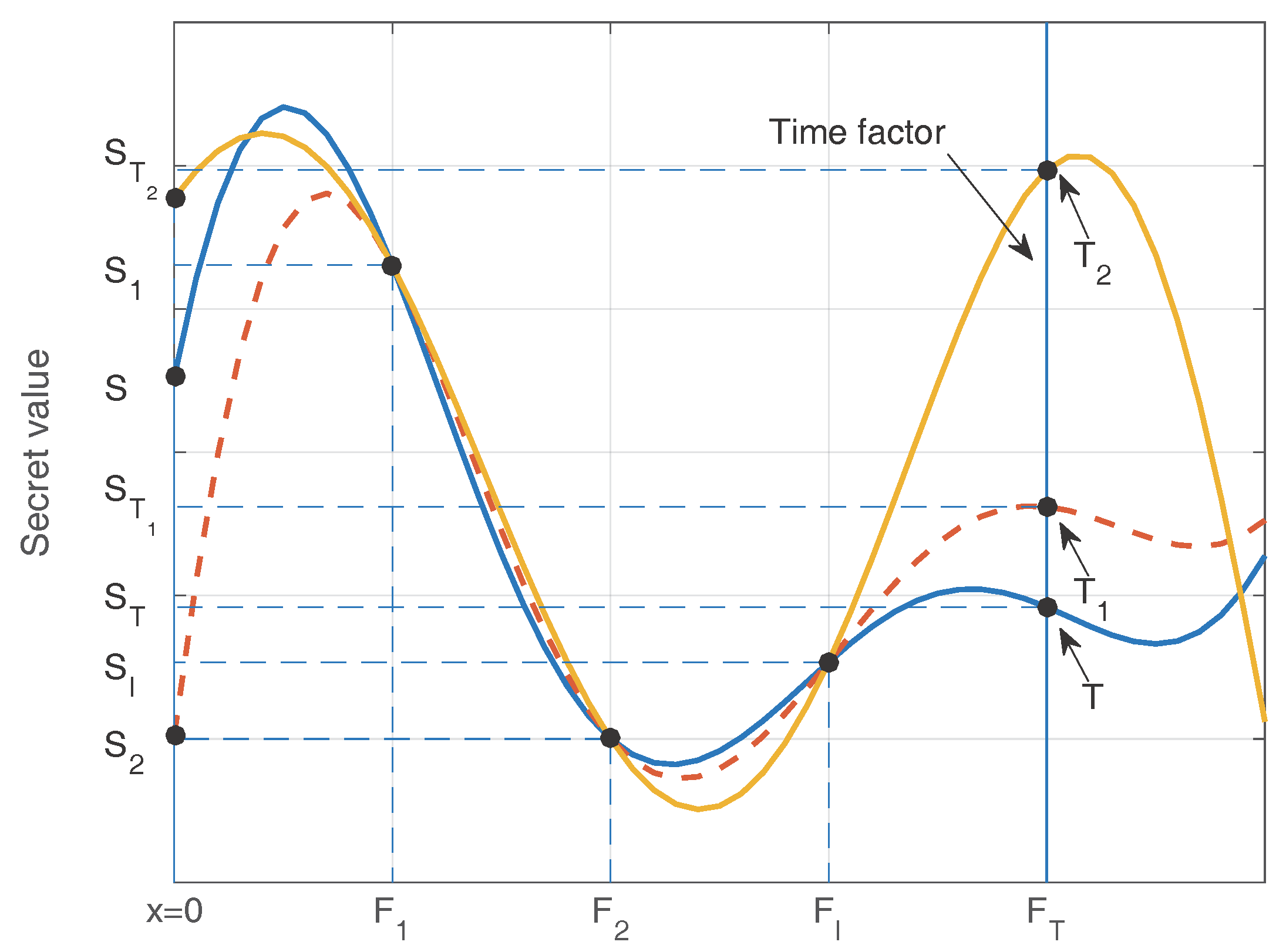
Figure 6. Reversed method based on the Lagrange polynomial.
Due to the properties of the Lagrange formulation, there can only be one curve described by the corresponding polynomial (Lemma 1); therefore, each set of ![\overline{\left[F_{i}: S_{i}\right]}](../../filter/tex/pix.php/8f38f50cf3a2f18141adfd8918d3800c.svg "\overline{\left[F_{i}: S_{i}\right]}") will produce its unique
will produce its unique  . However, if the biometric
data collected by MFA has not been changed over time, the secret will always remain the same, which is an obvious vulnerability of the considered system. On the other hand, a simple addition of the timestamp should always produce a unique curve, as
it is shown in Figure 6 for
. However, if the biometric
data collected by MFA has not been changed over time, the secret will always remain the same, which is an obvious vulnerability of the considered system. On the other hand, a simple addition of the timestamp should always produce a unique curve, as
it is shown in Figure 6 for  , and
, and  .
.
The proposed solution provides robustness against the case where all remain unchanged over time. This is achieved by adding a unique factor of time  which enables the presence of
  with the corresponding secret. It is necessary to
mention that the considered threshold scheme based on the Lagrange interpolation formula utilizes Rivest-Shamir-Adleman (RSA) mechanism or EIGamal encryption/decryption algorithm for authentication during the final step. In this case, it is proven
that we obtain a secure threshold scheme related to secrets in.
with the corresponding secret. It is necessary to
mention that the considered threshold scheme based on the Lagrange interpolation formula utilizes Rivest-Shamir-Adleman (RSA) mechanism or EIGamal encryption/decryption algorithm for authentication during the final step. In this case, it is proven
that we obtain a secure threshold scheme related to secrets in.